A current snapshot of global search engine usage by market share, sourced from StatCounter Global Stats. Market share shifts over time, so this page is updated periodically rather than treated as a one-time figure — check the "as of" date below before citing it.
The figure that matters most in this data isn't any single engine's ranking — it's the degree of concentration. Google alone accounts for the overwhelming majority of global search volume, with every other engine in this directory splitting a small remainder. That concentration is precisely why the AI-native search engines and privacy-focused alternatives covered elsewhere in this directory matter disproportionately to the niches they serve, even at a fraction of a percent of global share.
Chart image
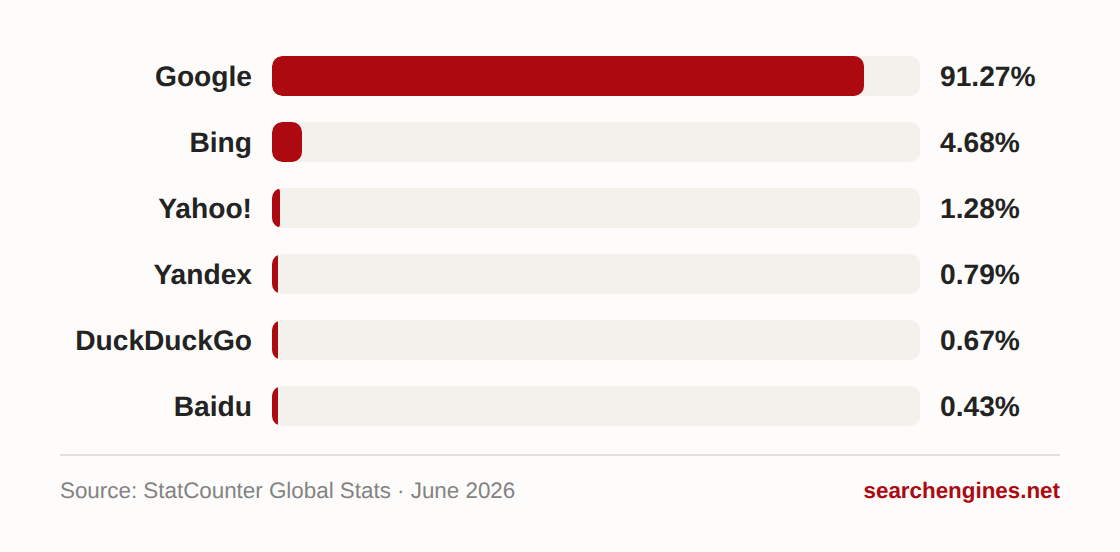
Worldwide, all devices. Bars below ~2% are rendered at a minimum visible width so they remain visible; refer to the table for exact figures.
Table image
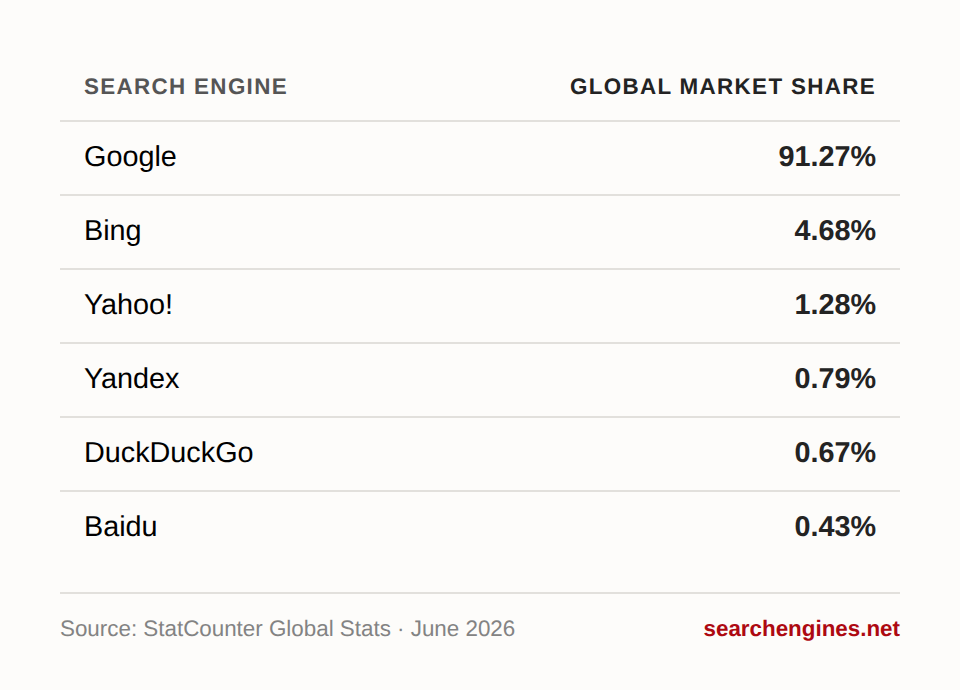
| Search Engine | Global Market Share |
|---|---|
| 91.27% | |
| Bing | 4.68% |
| Yahoo! | 1.28% |
| Yandex | 0.79% |
| DuckDuckGo | 0.67% |
| Baidu | 0.43% |
Source: StatCounter Global Stats, worldwide all-devices data. As of: June 2026. Remaining share (~0.9%) is distributed among smaller engines not individually tracked. Figures reflect overall search referral share and can differ meaningfully by country — see the Regional / International category for markets where a non-Google engine leads locally.